The key takeaways from the webinar were:
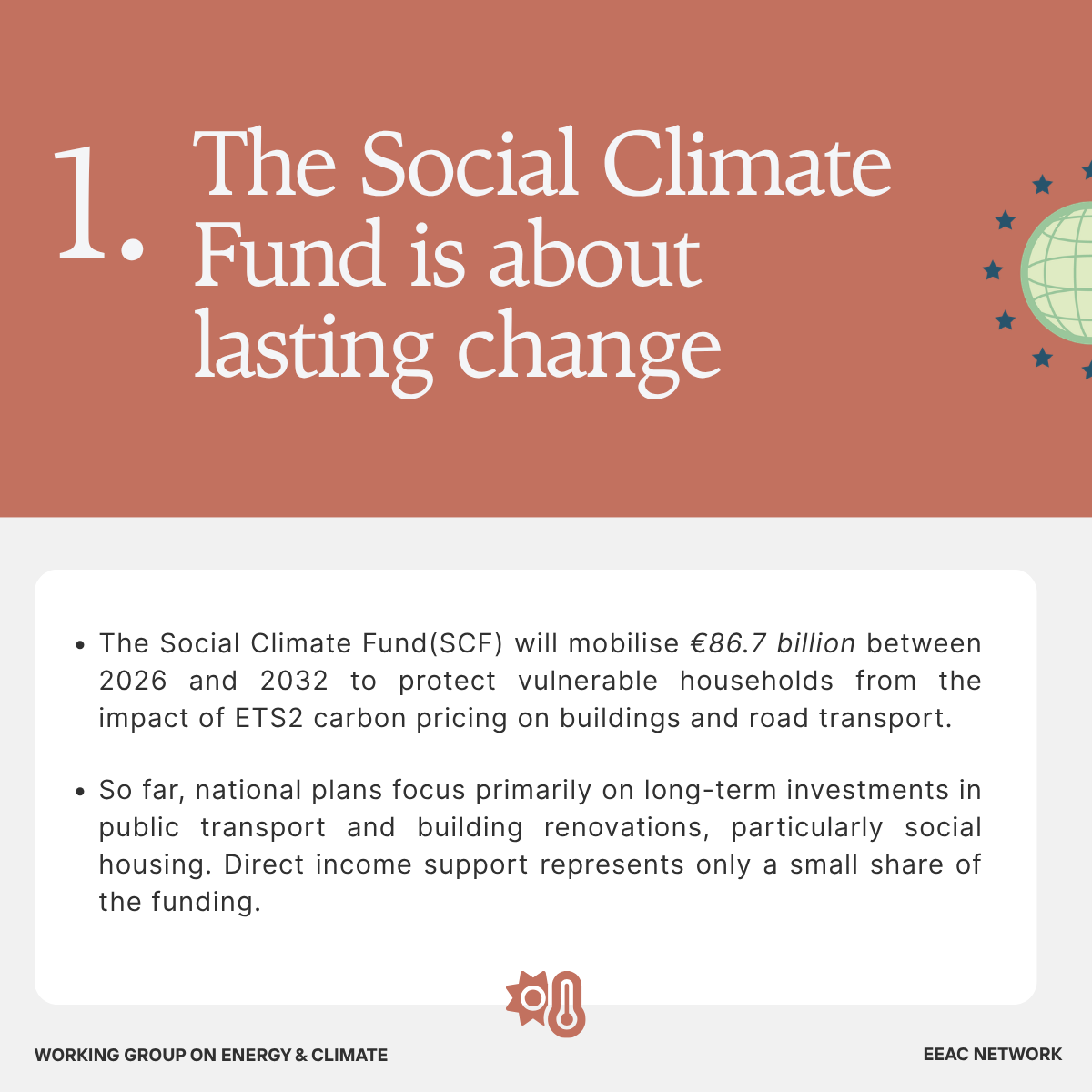
The Social Climate Fund is about lasting change – so far, national plans focus primarily on long-term investments in public transport and building renovations, particularly on social housing. Direct income support represents only a small share of the funding.
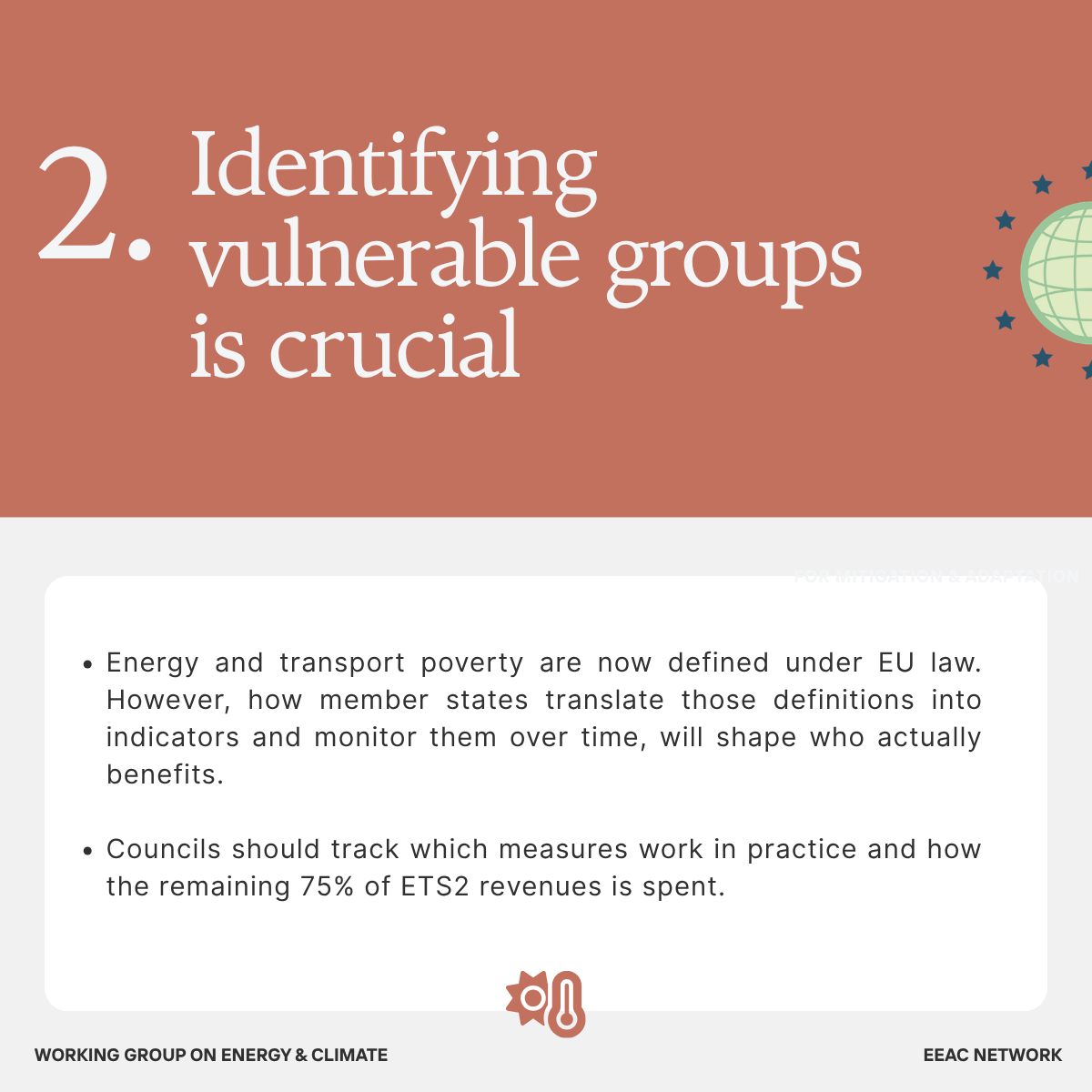
Identifying vulnerable groups is crucial — energy and transport poverty are now defined under EU law. However, how member states translate those definitions into indicators and monitor them over time will shape who actually benefits.
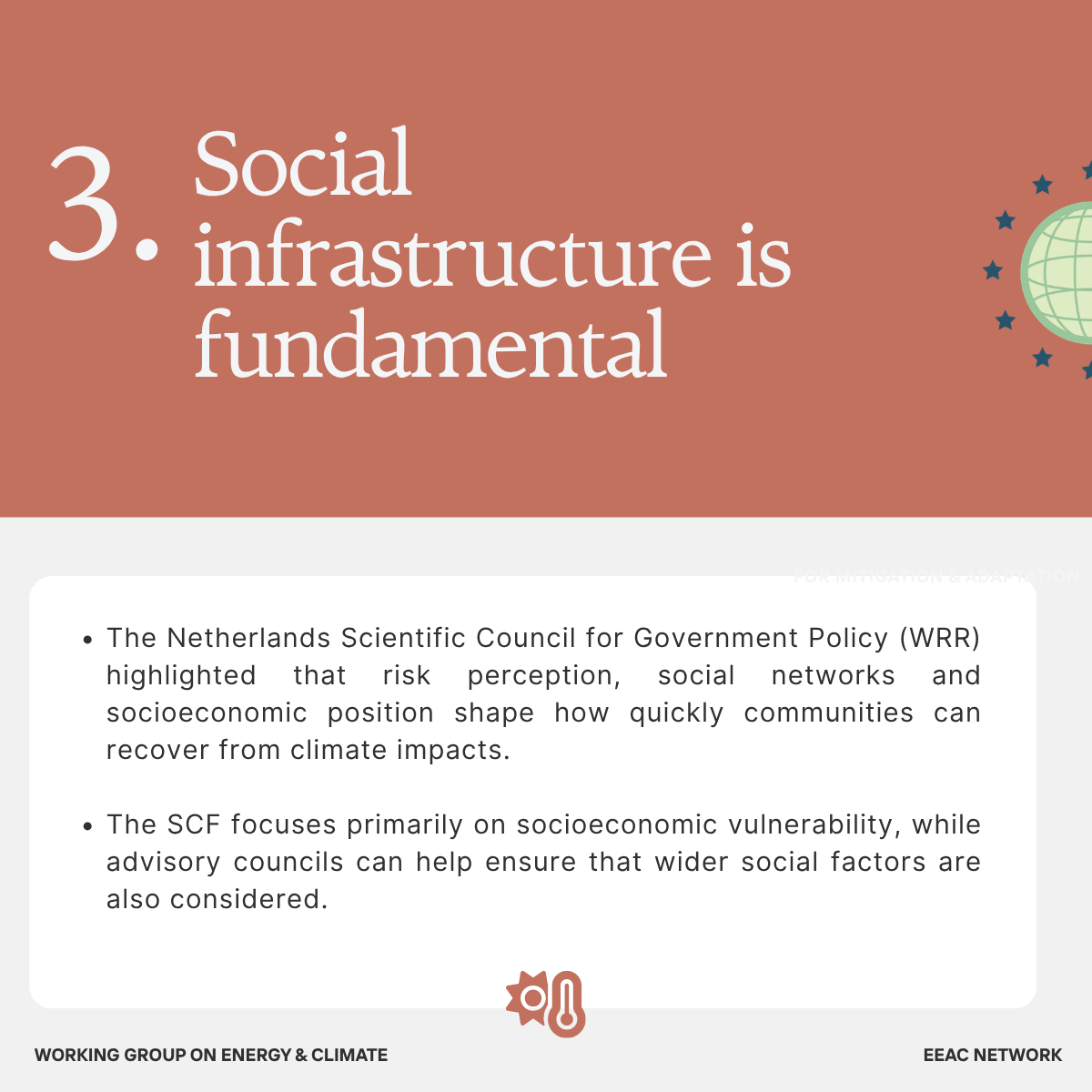
It is fundamental to create social infrastructure — risk perception, social networks and socioeconomic position shape how quickly communities can recover from climate impacts.